Fungal Genomics
Malassezia in environmental studies is derived from human inputs

Large-scale metagenomic analyses demonstrated that many reported environmental detections of Malassezia are strongly associated with human-derived microbial contamination rather than stable marine ecological populations. These findings emphasize the importance of contamination-aware interpretation in environmental microbiome studies.
Read PaperFunEndo: A Comprehensive Global-Scale Fungal Endophyte Repository
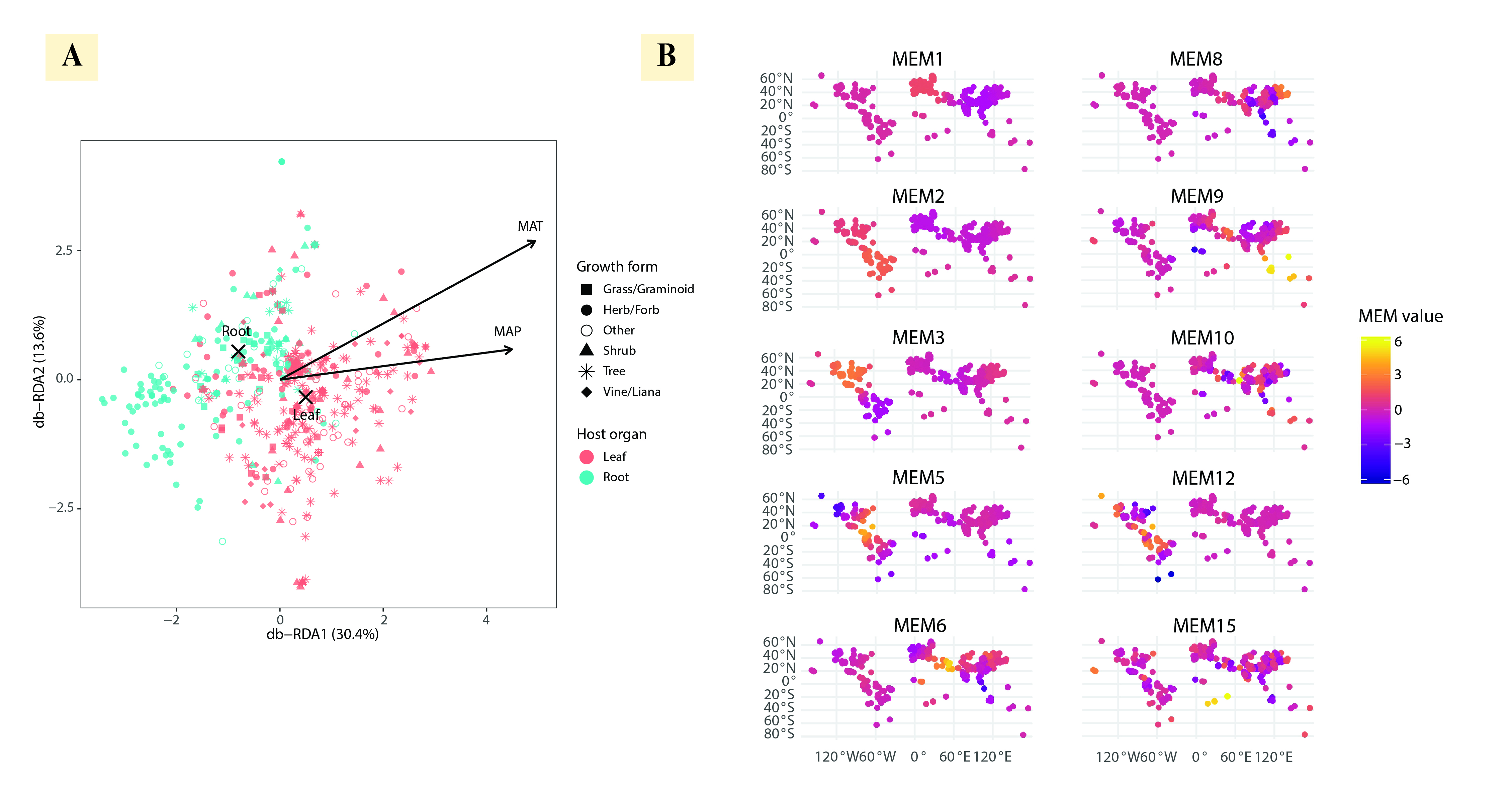
A comprehensive global-scale repository of fungal endophytes was developed by integrating approximately 105,000 records from more than 4,500 studies, encompassing around 4,300 fungal species across nearly 4,100 plant species. The study reveals strong dominance of Ascomycota, substantial variation in fungal communities across plant organs, and significant organ specificity among fungal genera. The analyses also show that fungal endophyte communities are shaped by host organ, growth form, climatic conditions, and spatial structure, providing a global framework for understanding fungal diversity and plant–fungus associations.
Read Paper